
Strong Feet Carry us Further
Our feet are some of the hardest‑working parts of the body. From the moment our children wake up to the moment they fall asleep, their feet are busy supporting every jump, run, stretch and wiggle.
How children’s feet grow
In the early years, many of the “bones” in your child’s feet are still soft and flexible, made mostly of cartilage. As they grow, this cartilage slowly turns into bone (this process is called “ossification”) and the foot takes on its permanent shape.
The main bone that helps form the arch (the navicular) usually becomes solid and shows its true position at around 5 years of age.
By about 15 years of age, all the bones in the feet are fully formed and solid.
Until then, children have growth plates at the ends of many bones. These areas are softer and more flexible than the rest of the bone, which makes them more vulnerable to stress, overuse and impact.
This is where we most often see pain and injury in children’s legs and feet.
Big movement milestones
As children grow, their posture and the way they move change many times.
Around 2½ years of age, most children start walking with a more “adult-like” heel‑to‑toe pattern.
Their center of gravity lowers, their hands come down to their sides, and they really begin their journey into active play.
From this age, it’s helpful for parents to gently observe how their child moves: do they seem comfortable, confident and happy when they walk and run?
Flat feet and tired legs
Some children have very flexible flat feet, which can make movement less comfortable. A great way to picture this is to imagine running on soft sand all day. It’s hard work, and over time little legs can become tired and achy.
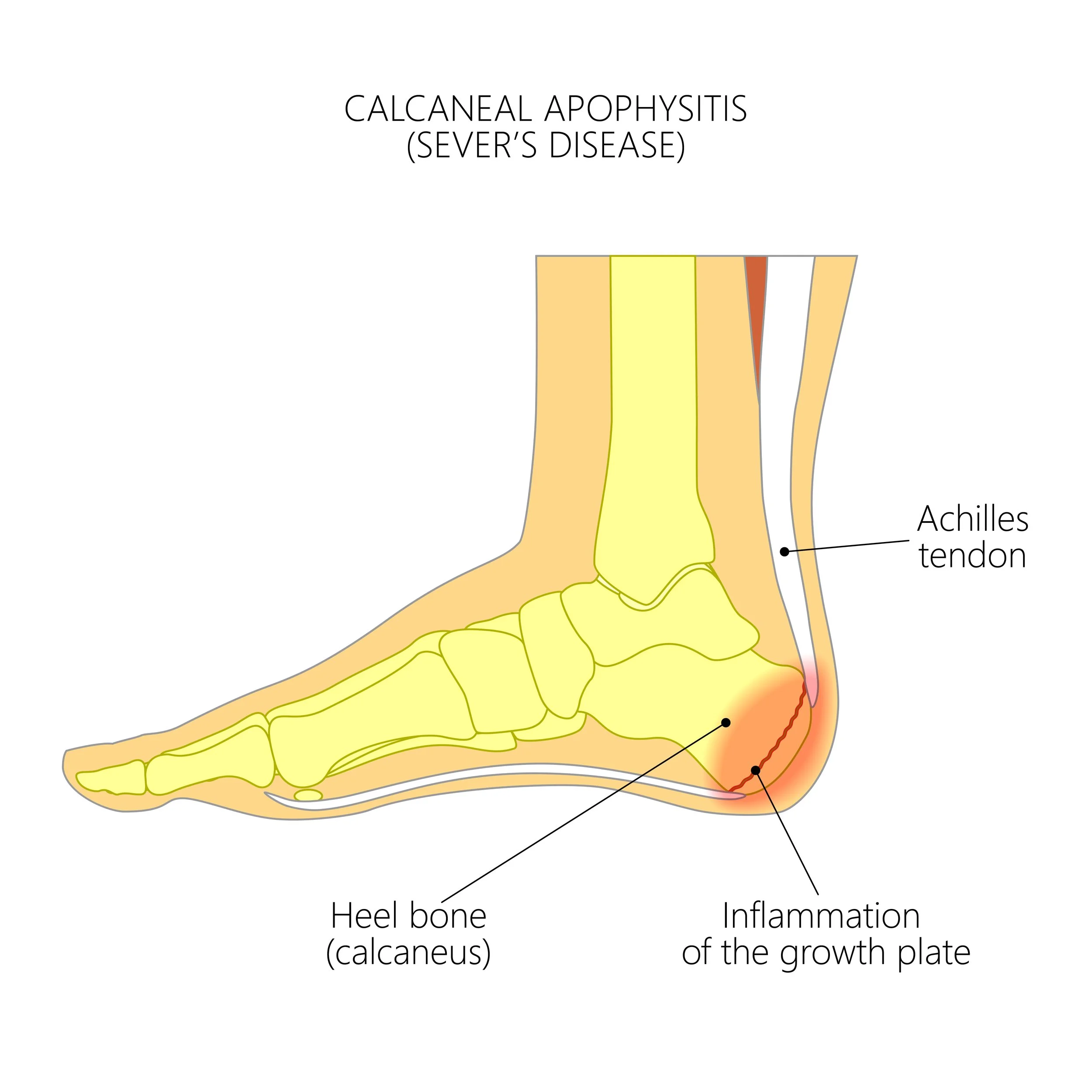
Heel Growth plate pain.
With flat feet, children may avoid movement not because they’re “lazy,” but because their bodies are working extra hard just to keep up.
Signs your child might be uncomfortable
Pain shows up differently at different ages.
In younger children, you might notice:
Refusing to walk, run or join in games
Struggling to keep up with other kids
“Growing pains” – although only about 10% of pain between ages 2–4 is truly just growth; after this age, pain usually has a cause that can be helped
In older children (around 7 years and up):
They can usually point to exactly where it hurts
You might notice they move more carefully or slowly than other kids
Walking and running may look like it takes more effort or concentration
Listening to these signs early allows us to support the whole child – body, mind and mood – before pain starts affecting confidence and enjoyment.
School, sport and extra load
Once children start school, the demands on their bodies increase quickly. There’s:
School sport
Weekend and after‑school activities
Long days on their feet
Different sports shoes and boots put pressure on different parts of the foot. Some designs place extra stress on the growing areas (growth plates), especially if there’s not enough support in the right place.
Why children’s feet need different support to adults’

After 23 years in paediatric and sports podiatry, I’ve helped many children build strong, healthy feet that support their whole wellbeing.
A key message for parents: children are not just small adults. Their feet and brains are still learning movement patterns.
Most “off‑the‑shelf” insoles are simply smaller versions of adult orthotics.
Adult insoles usually support right in the middle of the arch.
Children generally do better with support a little further back, under the heel and ankle area, to gently guide movement rather than “lock” the arch in place.
As children move, their brains are recording these patterns, and their muscles shape themselves around the support points they feel. This is a powerful opportunity to build healthy, lifelong movement habits.


What KIDZOLES are designed to do:
KIDZOLES are an off‑the‑shelf orthotic range I personally created for everyday active children during their key growth stages.
The designs change as children grow and their activity levels increase.
They’re slim enough to replace most standard shoe insoles and fit into AFL, NRL, Soccer, Netball, running, waffle and many casual shoes.
Kids can choose the shoes they love, while parents know there’s quiet, effective support working inside their “kicks.”
For parents, this means less time hunting for the “perfect supportive shoe” in every style. In most enclosed, lace‑up or adjustable shoes with a removable insole, you can simply add a KIDZOLE to instantly increase support.
Where the real magic happens: movement and strength
Orthotics are just one piece of the puzzle. For true whole‑body benefits, we need strong, flexible, confident feet and legs.
That’s why KIDZOLES come with step‑by‑step strengthening programs:
Delivered as short online videos you can access on a laptop, tablet or phone
Just 10 minutes a day
Gradually build strength in a safe, controlled way
This combination of smart support plus gentle, consistent strengthening helps children move more freely and comfortably, which supports better energy, mood, focus and overall wellbeing.
Our mission
KIDZOLES has now supported thousands of children worldwide through our Heel Pain Program and Flat Foot Program. Everything we do is based on one simple belief:
Healthy, active bodies = healthy, thriving minds.
When children can move with ease and joy, it supports not only their feet, but their confidence, sleep, learning and emotional health too.